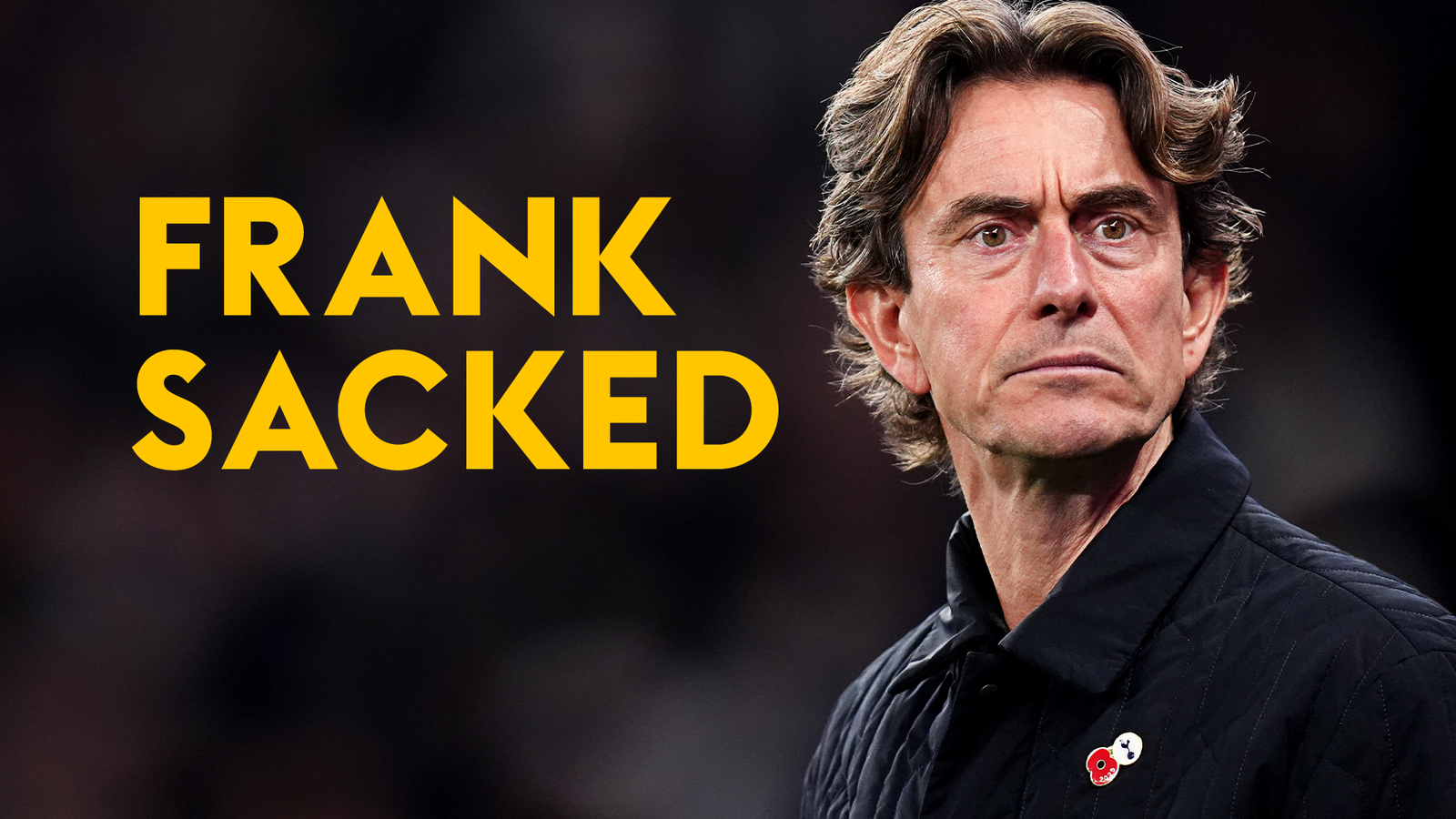
Tottenham Hotspur have officially parted ways with head coach Thomas Frank after a disappointing run of results left the club struggling near the bottom of the Premier League table.
Frank’s final match in charge came on Tuesday night when Spurs suffered a home defeat to Newcastle. The loss pushed Tottenham down to 16th place, just five points above the relegation zone, increasing pressure on the Danish manager.
As the final whistle blew at the Tottenham Hotspur Stadium, frustrated supporters voiced their anger. Fans booed loudly and chanted that Frank would be “sacked in the morning” and less than 24 hours later, the club confirmed his departure. 
A Promising Start That Quickly Turned Sour
Thomas Frank joined Tottenham on 12 June on a three-year contract, replacing Ange Postecoglou. Expectations were high after his impressive work at Brentford, but his time in North London never truly found momentum.
Spurs failed to win any of their last eight Premier League matches, and overall they managed only two wins in 17 league games. Early exits in both domestic cup competitions added to the growing disappointment.
While Tottenham performed better in the Champions League — finishing fourth in the league phase and qualifying automatically for the last 16 it was not enough to calm unhappy fans.
Fans Frustrated by Playing Style
One of the biggest issues for supporters was the team’s style of play. Many felt Tottenham lacked creativity and attacking sharpness under Frank.
The team often struggled to build attacks and create chances. Instead of dynamic passing and movement, Spurs relied too much on predictable crosses. This made their football feel slow and easy for opponents to defend.
There were also problems in front of goal. Richarlison scored seven league goals, but several attacking players — including Mohammed Kudus, Xavi Simons, Wilson Odobert, Mathys Tel, and Randal Kolo Muani — managed only six goals combined. Injuries did not help either. Dominic Solanke missed most of the season and has scored just twice since returning.
Injuries and Transition Behind the Scenes
Tottenham’s board initially wanted to remain patient with Frank. He had to deal with 11 injured players, a demanding Champions League schedule, and major changes in leadership within the club.
Chief executive Vinai Venkatesham even wrote an open letter to fans in January asking for patience. However, the atmosphere inside the stadium continued to worsen. Home performances were particularly poor, with Spurs winning only two league games at their own stadium.
The growing gap between fans and the team became impossible to ignore. Tension spilled onto the pitch, with visible reactions between players and supporters during matches.
The Turning Point of the Season
Many observers point to the 1-0 home defeat against Chelsea in November as the moment things began to unravel. Tottenham created almost no chances in that match, and frustration among fans exploded.
From that point on, results and performances continued to decline. With the club hovering dangerously close to the relegation zone, the board decided a managerial change was necessary.
In an official statement, Tottenham said:
“We have been determined to give Thomas the time and support needed to build for the future. However, results and performances have led the board to conclude that a change is necessary at this stage of the season.”
A Difficult Ending for a Manager Who Took a Risk
Frank once joked after joining Spurs that he liked taking risks, noting that he had never been sacked before in his coaching career. Now, after eight challenging months, he becomes the latest manager to leave Tottenham.
The club must now focus on stabilizing their season and moving away from the relegation battle. For Thomas Frank, the experience will serve as a tough lesson in the pressures of managing one of England’s biggest clubs.